Termite control
Xtermco treats Formosan subterranean and drywood termites in homes, condos and businesses across Honolulu and Oʻahu. After a free inspection, we recommend Sentricon baiting, liquid soil treatment, tent fumigation or a localized treatment, depending on which termite you have. We have done termite work since 1964. Call (808) 591-2922.
Formosan subterranean vs drywood termites: which one is in your home?
Hawaiʻi has eight termite species, all brought in by people moving infested wood, according to the University of Hawaiʻi termite project. Two of them do nearly all the damage to buildings on Oʻahu, and each needs a different treatment, so every job starts with identifying which one you have.
| Formosan subterranean termite | Drywood termite |
|---|
| Where the colony lives | In the soil. Workers build mud tubes to reach wood above ground. | Inside the wood it eats, with no contact with the soil. |
| Colony size | 2 to 10 million termites (UH CTAHR) | Colonies live inside infested framing, trim and furniture |
| What you see | Mud tubes on foundations, slab edges and plumbing; soft or hollow wood; swarms around lights | Piles of tiny six-sided pellets under wood; kick-out holes 1 to 2 mm wide; blistered paint |
| Swarm season | Mainly May and June, on warm, humid, nearly windless evenings | Pellets and kick-out holes are the more reliable sign |
| Usual treatment | Sentricon baiting or liquid soil treatment | Tent fumigation, or localized treatment when activity is confined to one spot |
Formosan subterranean termites
The Formosan subterranean termite is the single most damaging insect pest to homes and other structures in Hawaiʻi, according to UH CTAHR. Its colonies hold 2 to 10 million termites, and a poorly built home sitting on a large colony can be badly damaged in as little as two years. UH researchers estimated the yearly cost of prevention, control and repair in Hawaiʻi at over $100 million as far back as 1996.
Drywood termites
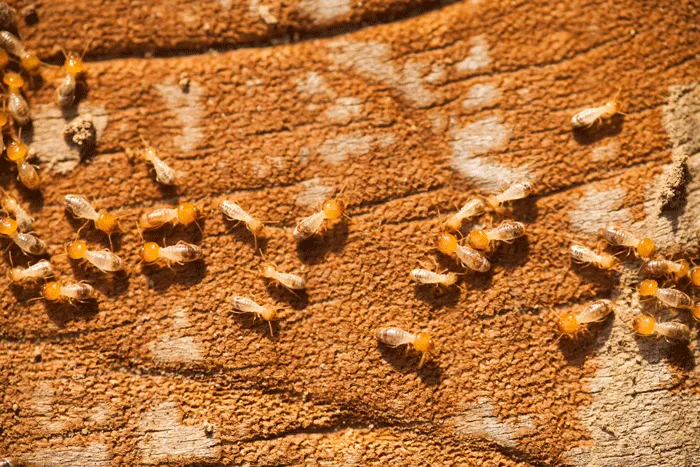
The West Indian drywood termite lives inside dry wood such as framing, trim and furniture, so it never needs the ground. It pushes hard, six-sided fecal pellets out of kick-out holes about 1 to 2 mm wide, and the pellets pile up like coarse sand. University of Florida researchers note that nearly all structural fumigation in Hawaiʻi is done to control this termite.
Oʻahu homes sometimes have both types at once. Our guide to identifying and managing drywood termites in Hawaiʻi covers the signs in more detail.
What are the signs of termites in a Honolulu home?
Most people find termites by accident. Look for:
- Mud tubes on foundations, slab edges, walls or plumbing lines (subterranean)
- Piles of sand-like pellets under wood, or tiny round holes in wood (drywood)
- Swarms of winged termites around lights in the evening, or wings left on window sills
- Springy floors or steps, hollow-sounding beams, sagging floors or warped walls
- Blistered or bubbling paint and soft spots in wood trim
- Cardboard-like “carton” material in wall voids
Winged termites indoors usually mean a colony is close; see what termites with wings inside the house mean. Leave the area alone, take photos and call for an inspection. Store-bought sprays kill only the termites they touch and won't reach the colony.
Which termite treatment is right for your home?
There is no single treatment that fits every termite problem. EPA registers liquid soil termiticides, termite baits and wood treatments for structural protection, and Hawaiʻi licenses fumigation (BR-1) and termite work (BR-3) as separate branches. Here is how the four main options compare.
| Treatment | Termite | How it works | When we use it | What it means for you |
|---|
| Sentricon baiting | Formosan subterranean | Bait stations set in the ground around the building. Termites share the bait, which contains noviflumuron and stops them from molting, and the colony dies off (Corteva). | Active subterranean termites, or as ongoing protection with no active infestation | No drilling or trenching; stations stay in place and are checked on a schedule |
| Liquid soil treatment | Formosan subterranean | A termiticide labeled for soil use is applied around and under the structure to block termites coming up from the ground. | Subterranean activity where a soil barrier can be applied completely | May involve trenching beside the foundation or drilling through slabs and patios |
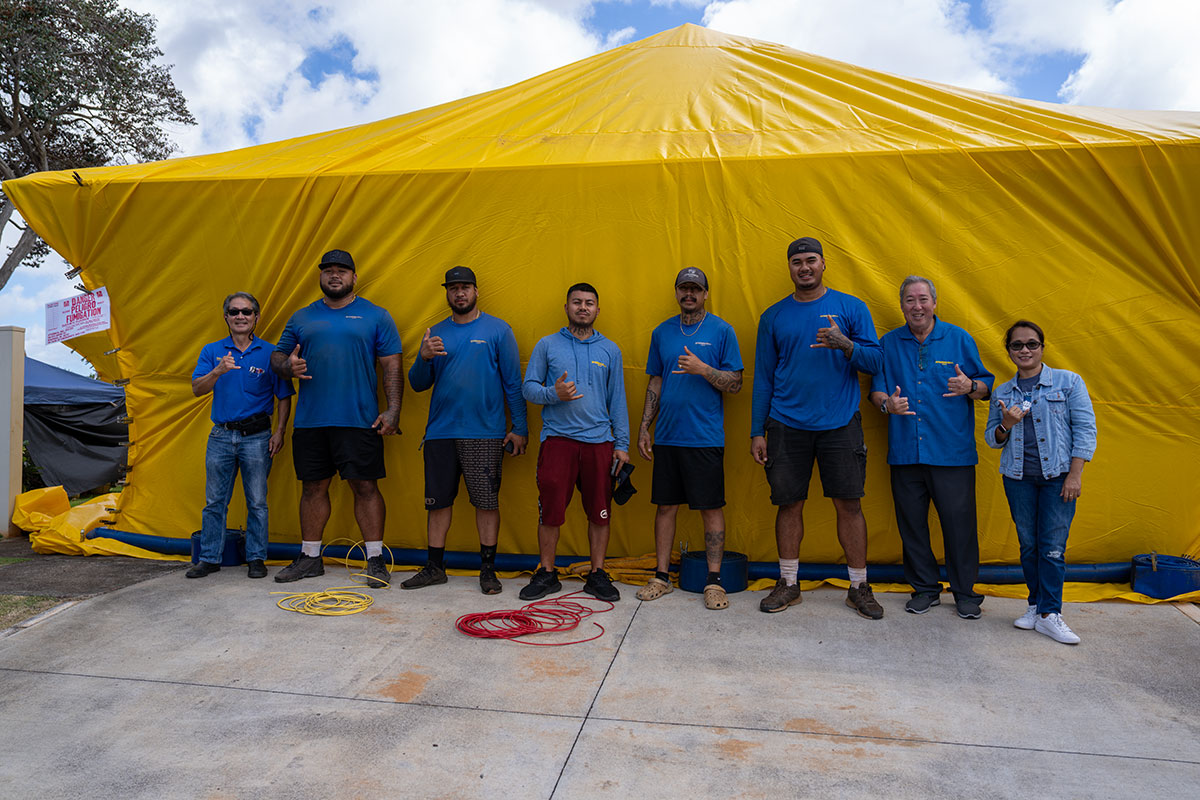
| Tent fumigation | Drywood | The building is tarped and filled with sulfuryl fluoride gas, which reaches termites deep inside walls and roof framing. | Drywood termites spread through the structure or in areas that can't be reached | Everyone, including pets, leaves; the house is aired out and tested before re-entry |
| Localized (spot) treatment | Drywood | Termiticide injected into the infested wood or wall void. | A small infestation confined to one area, such as a door frame or one section of trim | No need to leave home; doesn't protect the rest of the building |
Many Oʻahu homes need more than one approach, for example tent fumigation for drywood termites in the roof and Sentricon for Formosan termites in the soil. Before tenting, read what to expect when you tent your home.
Is termite treatment safe for my family and pets?
EPA registers termiticides only after reviewing their effects on health and the environment, and only for use exactly as the label directs. Sulfuryl fluoride is a restricted-use pesticide, so only certified applicators may use it. EPA sets 1 ppm as the safe level for going back into a fumigated home, and we test the air before you return.
What happens from inspection to treatment?
1Free inspection
A technician checks the interior, attic, crawl space or slab edges and the exterior for termite activity and conditions that attract termites.
2Written recommendation and estimate
You get the treatment options, what each involves and the price.
3Scheduling and prep
For tent fumigation we send prep instructions and coordinate timing. Sentricon and soil treatment need little prep.
4Treatment
Carried out by licensed technicians, following the product label.
5Follow-up
Sentricon stations are monitored on a schedule. For other treatments, we tell you what to watch for and when to book your next inspection.
What affects termite treatment cost on Oʻahu?
No two termite jobs are priced the same, because the price follows what the inspection finds. These are the main factors:
1Which termite you have
Formosan subterranean termites are treated from the soil with baiting or a liquid barrier. Drywood termites spread through a building usually need whole-structure fumigation, which is priced differently from ground-level work.
2The size and layout of the building
Soil treatment and bait systems are planned around the length of the foundation perimeter, while tent fumigation depends on the volume of the building being tarped. Multi-story homes, complex rooflines, attached lanai, slabs that need drilling and tight crawl spaces all add labor.
3How far the infestation has spread
Activity caught early in one door frame can sometimes be treated locally. Termites left alone for years can damage studs, joists and subfloors and may need a combination of treatments, such as fumigation plus a soil or bait system.
4One-time treatment or ongoing protection
Sentricon includes scheduled monitoring after installation, so its cost covers the installation and the service that follows. Ask what follow-up visits and re-treatment terms each option includes.
5Conditions around the home
Wood touching the soil, leaking hose bibbs, clogged gutters and plants against the siding give subterranean termites an easy way in. Fixing them before treatment protects what you pay for.
Why not choose the cheapest quote? EPA notes that products that only claim to kill termites have not shown they can protect a structure, and a soil treatment done improperly will not protect against termites. Compare what each estimate treats, not just the price. We give you a written estimate after a free inspection; for broader pricing factors, read our guide to pest control costs in Hawaiʻi.
Buying or selling a home? Get a termite inspection report (TIR)
Most Oʻahu home sales include a termite inspection report. Under Hawaiʻi rules (HAR §16-94-73), a TIR is done on the Pest Control Board's PC-9 form with a diagram of termite evidence, damage and any areas that couldn't be inspected, and it must be signed by a licensee in the fumigation or termite branch. Each report also has to include treatment recommendations. Request a professional termite inspection for your sale or purchase.
How can you help prevent termites?
- Keep wood, lumber and firewood off the ground and away from the house.
- Clear plants, mulch and soil away from the foundation and siding.
- Fix leaks and drainage that keep soil wet next to the house.
- Break any mud tubes you find, then call for an inspection.
- Turn off outdoor lights on swarm evenings in May and June.
- Book an inspection every year, and before buying a home.
Why choose Xtermco for termite control in Honolulu?
- Termite work since 1964. Xtermco started in 1961 and added tent fumigation and termite treatment in 1964.
- Licensed. Hawaiʻi pest control operator license PCO-201.
- Every method under one roof. Tent fumigation, Sentricon, soil and localized treatment, inspections and TIRs.
- Local team based in Waipahu, serving Honolulu, Kailua, Kāneʻohe, Kapolei, ʻEwa, Pearl City and Mililani.
- BBB-accredited since 1982, rated A+.
Termite control FAQ
How much does termite control cost in Honolulu?
Price depends on which termite you have, the size and construction of the building, how far the infestation has spread and the treatment you choose. Tent fumigation is priced by the building being tarped, while soil treatment and Sentricon follow the foundation perimeter. Xtermco inspects first and gives you a written estimate at no charge, so you know the cost before any work starts.
How do I know if I have drywood or subterranean termites?
Look at the evidence. Formosan subterranean termites build mud tubes and leave cardboard-like carton in walls. Drywood termites push out hard, six-sided pellets that pile up like coarse sand below small kick-out holes in wood. Oʻahu homes sometimes have both types at once, so a professional inspection is the surest way to know before you choose a treatment.
Do I have to tent my house for termites?
Not always. Tenting is the standard treatment when drywood termites are spread through a building, because the gas reaches framing that can't be treated by hand. Formosan subterranean termites live in the soil, so they are usually treated with Sentricon baiting or a liquid soil treatment instead. A small drywood infestation confined to one spot can sometimes be treated locally.
How does Sentricon work, and how long does it take?
Sentricon bait stations go in the ground around your home. Termites feed on the bait, which contains noviflumuron, carry it back and share it through the colony; termites that can't molt die, and the colony collapses. Timing depends on how quickly termites find the stations and how big the colony is, so there is no fixed timeline. Stations stay in place and are checked on a schedule.
Is termite treatment safe for my family and pets?
Termiticides are registered by EPA for use exactly as the label directs, and our licensed technicians follow those labels. For tent fumigation, everyone, including pets, leaves the house, and the air is tested before you go back in; EPA sets 1 ppm of sulfuryl fluoride as the safe re-entry level. Sentricon bait stays inside stations set in the ground.
When is termite swarm season on Oʻahu?
Formosan subterranean termites swarm mainly in May and June, on warm, humid, nearly windless evenings, according to the University of Hawaiʻi. Each swarm lasts about half an hour, and the winged termites fly toward the nearest light. Smaller swarms can happen at any time of year, so winged termites indoors are worth an inspection whatever the month.
What is a termite inspection report (TIR) for a home sale?
A TIR documents a termite inspection for a real estate transaction. In Hawaiʻi it is completed on the Pest Control Board's PC-9 form with a diagram showing termite evidence, damage and areas that couldn't be inspected, and it must be signed by a licensee in the fumigation or termite branch. The report also includes treatment recommendations. Request one through our professional termite inspection page.
How often should I get a termite inspection?
Once a year is a sensible routine on Oʻahu, because termite damage often stays hidden behind walls and under floors. Book an inspection sooner if you see swarmers, mud tubes or pellets, before you buy or sell a home, and after renovations or landscaping that disturb the soil around your foundation.
Book a free termite inspection
Seen wings, mud tubes or pellets? Tell us what you found and where. We'll inspect, identify the termite and give you a written estimate at no charge.