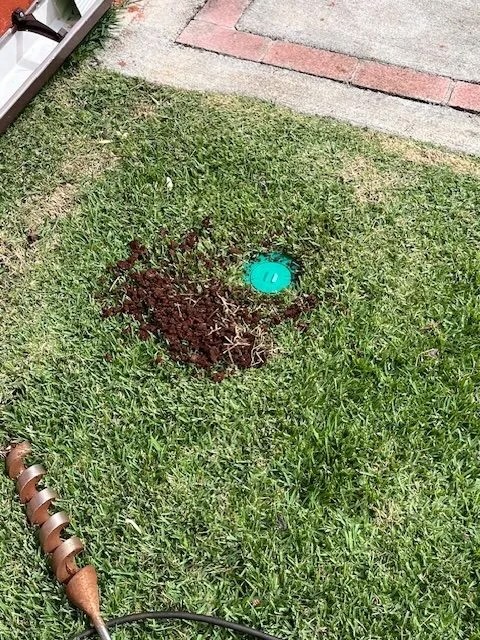
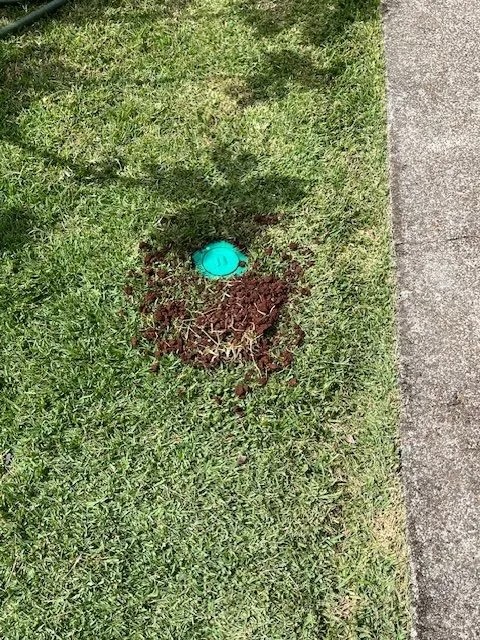
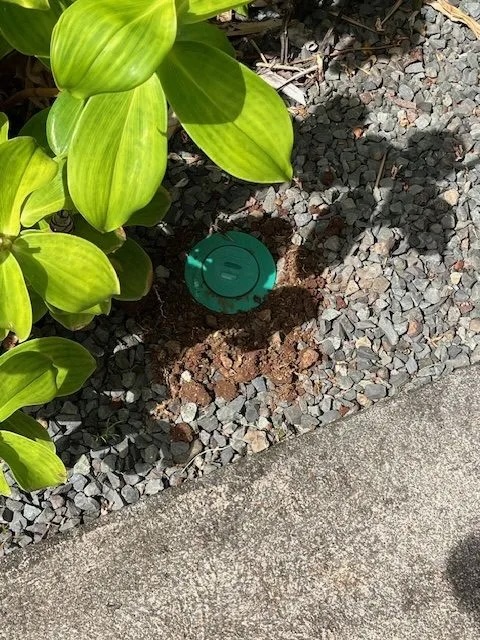
Sentricon is a termite bait system: stations set in the ground around your home hold a bait that termites carry back and share until the colony dies, then the stations keep watching for new colonies. On Oʻahu it suits homes at risk from Formosan subterranean termites, especially where trenching, drilling or nearby water rule out a liquid treatment.
Sentricon is a termite colony elimination system made by Corteva Agriscience. It was developed with Dr. Nan-Yao Su of the University of Florida and launched in 1995, and EPA registered it as a reduced-risk pesticide (EPA).
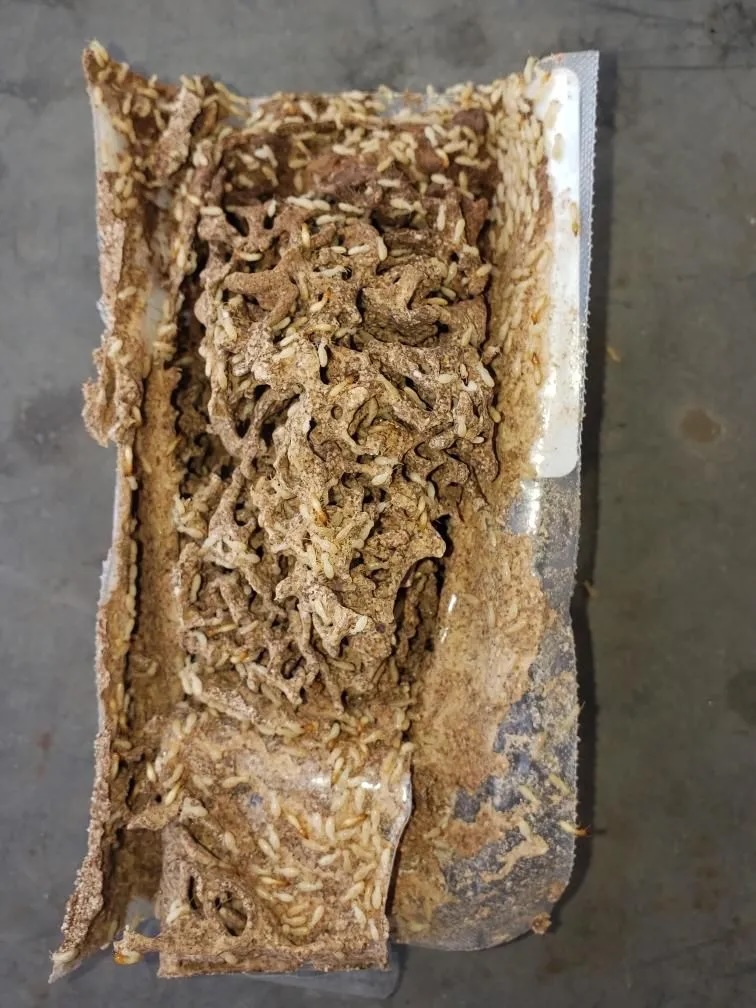
Instead of soaking the soil with pesticide, Sentricon puts a small amount of bait only where termites are feeding. Foraging termites find the stations, eat the bait, which contains noviflumuron, and carry it back to the colony. Termites that can't molt die, and the colony collapses. The stations then stay in place to intercept new colonies (Corteva).
In 2000, the original Sentricon system won the EPA's Presidential Green Chemistry Challenge Award, because it replaces widespread soil applications with bait used only where termites are active.
Is Sentricon right for your Oʻahu home?
Sentricon targets subterranean termites. On Oʻahu that mainly means the Formosan subterranean termite, which UH CTAHR calls the single most damaging insect pest to homes in Hawaiʻi, with colonies of 2 to 10 million termites. It is a good fit if:
You have, or want to prevent, ground termites coming up from the soil
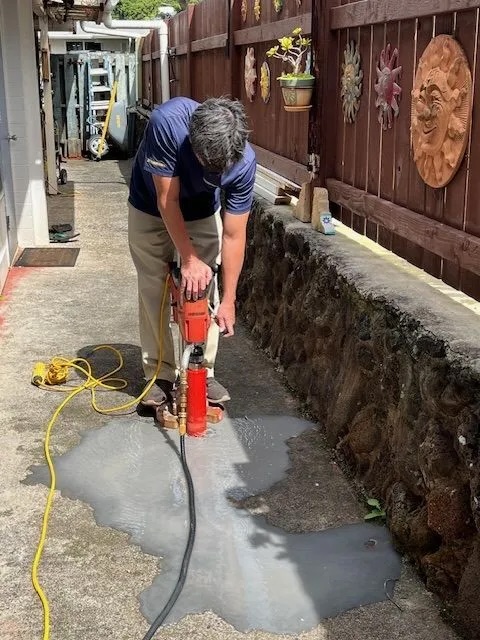
You don't want trenching along the foundation or drilling through slabs and patios
Your home is near a well, pond, stream or catchment system
You want yearly monitoring rather than a one-time treatment
Both are registered by the EPA for structural termite protection, and both reach beyond the termites you can see: Sentricon through shared bait, Termidor through what BASF calls its transfer effect. They differ in how they are installed, monitored and renewed. Claims below are attributed to each manufacturer.
Sentricon (bait stations)
Termidor (liquid barrier)
How it works
Bait stations around the home. Termites feed on bait with noviflumuron, which stops them molting, and share it until the colony collapses (Corteva).
A liquid termiticide in the soil around and under the home. Termidor (fipronil) is non-repellent, and termites that touch it pass it to others before dying (BASF).
Installation
Stations go into the soil around the perimeter, with no trenching or drilling (Corteva).
Usually trenching along the foundation and drilling through slabs or patios where soil can't be reached (Corteva, EPA).
Near wells, ponds or catchment
Can be installed near water sources (Corteva).
Labels often restrict use near wells, ponds, cisterns and other water (Corteva).
Monitoring
Stations are inspected and serviced every year to catch new colonies (Corteva).
No built-in monitoring; book regular termite inspections.
How long protection lasts
As long as the stations are serviced.
Corteva says liquid barriers degrade and typically need reapplying every five to seven years; check the product label and your warranty.
Speed
Colony elimination often takes 90 days or less, according to Corteva.
Acts on termites as they cross the treated soil (EPA, BASF).
Best fit on Oʻahu
Formosan subterranean termites, homes with landscaping or hardscape you want left alone, properties near water, and long-term monitoring.
Active subterranean infestations where a complete soil barrier can be applied, and owners who prefer a one-time treatment over a yearly service.
Xtermco's Sentricon installation starts at $1,000, and annual monitoring starts at $400. Your exact price comes from a free inspection.
These are the factors that set the price:
1
Size of the home's perimeter
Stations are placed in a ring around the building (Corteva), so a longer perimeter means more stations and more installation time.
2
Number of stations
Lot layout, additions, lanai and nearby trees decide how many stations are needed and where they go.
3
Hardscape and access
Concrete, decks and retaining walls change where stations can go and can add labor.
4
Active termites indoors
If termites are already active inside, above-ground stations may be added to treat the infestation right away (Corteva).
5
Annual renewal
After installation, a yearly fee covers inspecting and servicing the stations to catch new colonies.
A liquid treatment can cost less in the first year because there is no yearly service fee, but it has no monitoring built in and, according to Corteva, typically needs reapplying every five to seven years. When you compare quotes, compare what each includes over several years: installation, monitoring visits, re-treatment and any warranty.
How Sentricon is installed and monitored
Here is what happens from the first visit to the yearly service.
1
Free inspection
A technician checks the home and yard for termite activity and conducive conditions, and measures the perimeter to plan station locations.
2
Installation
Stations go into the soil in a protective ring around the home, where foraging termites are most likely to find them. Where termites are already active indoors, above-ground stations can be added (Corteva).
3
Feeding and colony elimination
Termites find the bait, which Corteva says is up to 10 times more desirable to them than wood, carry it back and share it. Termites that can't molt die, and the colony collapses.
4
Annual monitoring
Each year, the stations are inspected and serviced to catch new colonies before they reach the home (Corteva).
Why choose Xtermco for Sentricon on Oʻahu?
Termite work since 1964. Xtermco started in 1961 and added termite treatment and fumigation in 1964.
Licensed. Hawaii pest control operator license PCO-201.
Every termite option. Sentricon, liquid soil treatment, tent fumigation, localized treatment and termite inspection reports, so the recommendation fits your home.
Local team based in Waipahu, serving Honolulu, Pearl City, Kapolei, ʻEwa, Mililani, Kailua and Kāneʻohe.
BBB-accredited since 1982, rated A+.
Sentricon FAQ
What does Sentricon help protect against?
Sentricon is designed to eliminate and protect against subterranean termites, including the Formosan subterranean termite, which UH CTAHR calls the single most damaging insect pest to homes in Hawaiʻi. It does not treat drywood termites, which live inside wood above ground. A termite inspection confirms which termite you have before you choose a treatment.
Does Sentricon replace every termite treatment?
No. It is one tool in a termite protection plan. Sentricon handles subterranean termites from the soil, but drywood termites spread through a building usually need tent fumigation, and a small drywood problem may need localized treatment. Many Oʻahu homes use Sentricon for ground termites and fumigation for drywood termites. The inspection decides what your home needs.
How much does Sentricon cost on Oʻahu?
Xtermco's Sentricon installation starts at $1,000, with annual monitoring from $400. The final price depends on the length of the home's perimeter, how many stations are needed, hardscape and access, and whether termites are already active inside. We measure your property during a free inspection and give you a written estimate before anything is installed.
Is Sentricon better than Termidor?
Each fits different homes. Sentricon uses bait stations with no trenching or drilling and yearly monitoring, and can go near wells and catchment. Termidor is a non-repellent liquid barrier applied to the soil, which termites pass to each other, and it has no built-in monitoring. Your inspection, the termite type and how the home is built decide which suits you.
Is there a yearly fee for Sentricon?
Yes. After installation, a yearly service plan pays for inspecting and servicing the stations so new colonies are caught before they reach your home. Corteva describes this annual inspection as what gives Sentricon continuous, long-term protection. Xtermco's annual monitoring starts at $400; your estimate shows the exact amount for your property.
How long does Sentricon take to eliminate a colony?
It depends on how quickly termites find the stations and how large the colony is. Corteva says elimination often happens in 90 days or less. Formosan colonies on Oʻahu can hold 2 to 10 million termites, according to UH CTAHR, so the stations stay in place after elimination and are serviced every year to catch new colonies.
Is Sentricon safe around my family, pets and water?
EPA registered the original Sentricon system as a reduced-risk pesticide and gave it a Presidential Green Chemistry Challenge Award in 2000, because the bait is used only in stations where termites are active instead of being spread through the soil. Corteva says the stations can also be installed near wells, ponds and cisterns. Stations are serviced by trained technicians.
Protect your home from ground termites
Book a free Sentricon inspection and get:
A check for termite activity and conducive conditions
 Sentricon termite baiting